
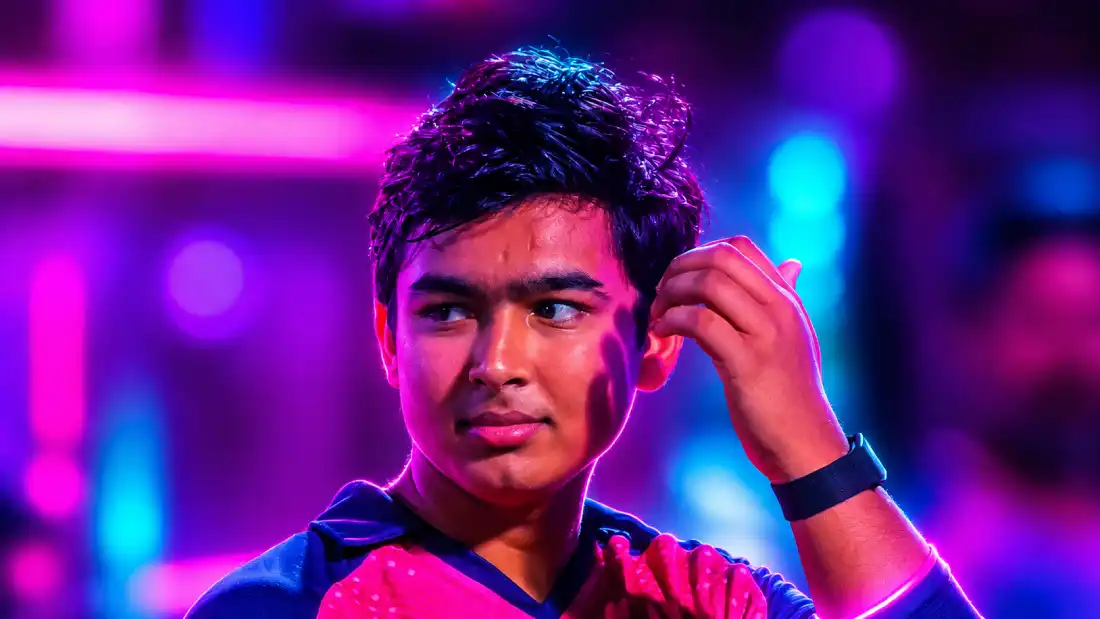
Vaibhav Sooryavanshi is 15 years old, has played eight first-class matches, and has just been named vice-captain of a Duleep Trophy side containing Mohammed Shami. There is nothing conventional about that sentence, and there was never going to be anything conventional about how his rise into leadership happened either.
East Zone’s decision to make the teenager Ishan Kishan’s deputy for the upcoming tournament has raised plenty of eyebrows. The squad includes Shami, Abhimanyu Easwaran and Mukesh Kumar, cricketers with far more senior domestic experience than Sooryavanshi can currently claim. Yet the zone’s selectors looked past hierarchy on purpose.
Why East Zone Made Vaibhav Sooryavanshi Vice-Captain
Selector Pravanjan Mullick has explained that the extra responsibility was handed to Sooryavanshi deliberately. The belief is that it could speed up his maturity as a cricketer. Kishan stays captain, and as the side’s wicketkeeper he will still lead most of the tactical decision-making out in the middle.
That distinction matters enormously. Sooryavanshi can operate as an apprentice learning the trade, rather than someone suddenly carrying the full weight of running a four-day side. Whether that turns into an inspired piece of development or an unnecessary complication depends entirely on how East Zone manage it from here.
There are really two ways this goes. Leadership could sharpen his tactical awareness and teach him to read fields, spells and match phases properly. Or Indian cricket could start loading responsibilities onto a 15-year-old. His gift is precisely how little seems to happen between seeing the ball and reacting to it.
Vaibhav Sooryavanshi Has Handled Responsibility Well Before
This is not actually the first time selectors have looked at Sooryavanshi and seen a leader. Bihar made him vice-captain for the start of their 2025-26 Ranji Trophy campaign at just 14, serving under Sakibul Gani.
More tellingly, he captained India’s under-19 side during a three-match Youth ODI series in South Africa earlier this year. He stepped in after regular skipper Ayush Mhatre was unavailable. His first innings in charge brought only 11 runs from 12 balls, hardly the response critics of the move might have expected.
What followed told a different story. Sooryavanshi smashed 68 from 24 balls in the second match, then followed it with 127 from 74 in the third. India completed a 3-0 sweep, and he finished the series as Player of the Series with 206 runs from his three matches in charge.
It is a tiny sample, and youth one-day cricket sits a long way from a Duleep Trophy fixture. But it offers one useful clue. Ten sixes came inside that 24-ball 68, and another ten arrived during the 127. Captaincy did not turn an instinctive attacker into someone worried about occupying the crease.
The First-Class Numbers Vaibhav Sooryavanshi Still Needs to Fix
His greatest gifts are already obvious: early ball recognition, unusual power, and total conviction in his strokeplay. His first-class record shows exactly what remains unfinished. Across eight matches and 12 innings, Sooryavanshi averages 17.25, with a single fifty and a highest score of 93.
His Youth Test record reads far healthier: 331 runs at 33.10 with two centuries. Senior red-ball cricket remains the format he has solved least convincingly. The contrast with his white-ball form is stark. He scored 776 IPL runs in 2026 at an average of 48.50 and a strike rate of 237.30.
Sachin Tendulkar made a pointed observation about the teenager earlier this year. He warned that if too many instructions come between how he sees and reacts to the ball, “that’s where the real challenge would be.” He should simply be given “freedom to go out and bat the way he does,” Tendulkar added.
Leadership creates thought, and thought is exactly what Tendulkar wants kept away from Sooryavanshi’s batting for now. A leader cannot always walk away from his own dismissal and simply move on. He may have to think immediately about a bowler’s workload or a field change instead.
Leadership Has Improved Batters Like Graeme Smith and Shubman Gill
There is no universal rule that responsibility damages a young batter. Graeme Smith was only 22, with just eight Tests behind him, when South Africa made him captain in 2003. On that year’s tour of England, his first major assignment away from home, Smith scored 714 runs, including 277 at Edgbaston and 259 at Lord’s.
Shubman Gill offered a more recent example. On his first tour as India’s Test captain, in England in 2025, Gill scored 754 runs at an average of 75.40 with four centuries. That included 269 and 161 in the same match at Edgbaston.
For some batters, responsibility organises them rather than draining them. It sharpens emotional control and makes their own wicket feel more valuable. Sooryavanshi’s brief India U19 captaincy at least suggests he might belong in that category too.
But Smith was still 22, and Sooryavanshi is 15. That seven-year gap matters hugely when the question is not cricketing ability but emotional and intellectual development. East Zone’s approach only works if the word “vice” stays more important than the word “captain.”
He does not need to be the loudest voice in a dressing room built around Shami and Easwaran. Let him stand beside Kishan when fields are set, and ask Shami why he wants a third slip rather than a leg-side catcher. That is leadership education without leadership theatre.
The success of this experiment should not be judged by whether Sooryavanshi becomes India’s captain one day. It should be judged by what happens to Sooryavanshi the batter. East Zone need to be wise enough to remove the responsibility as quickly as they gave it, if it starts producing caution instead of growth.